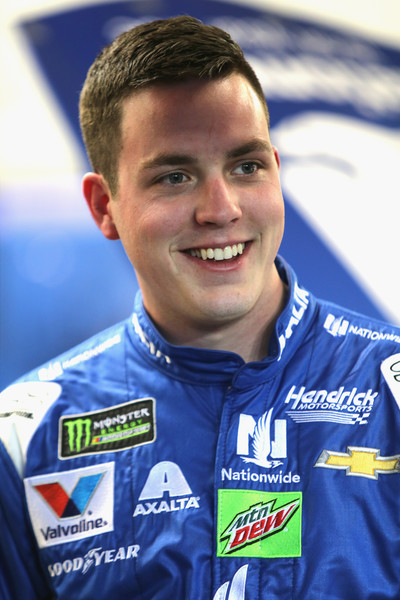
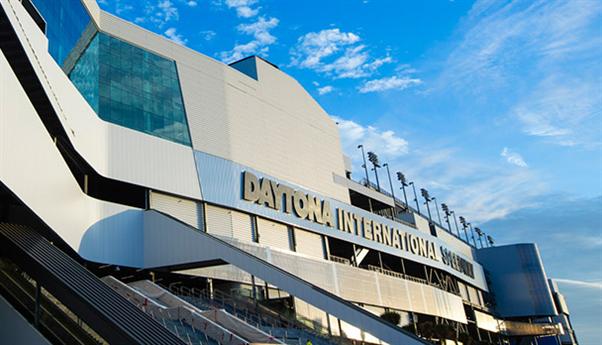
Alex Bowman, driver of the #88 Nationwide Chevrolet, stands in the garage during practice for the Monster Energy NASCAR Cup Series Advance Auto Parts Clash on February 17, 2017 at Daytona International Speedway in Daytona Beach, Florida. Photo – Jerry Markland/Getty Images
After a stellar performance as a substitute driver for Dale Earnhardt Jr. last year, Alex Bowman got several offers of NASCAR rides – but none that could induce him to leave Hendrick Motorsports, where he spends most of his time driving a simulator. Continue reading →
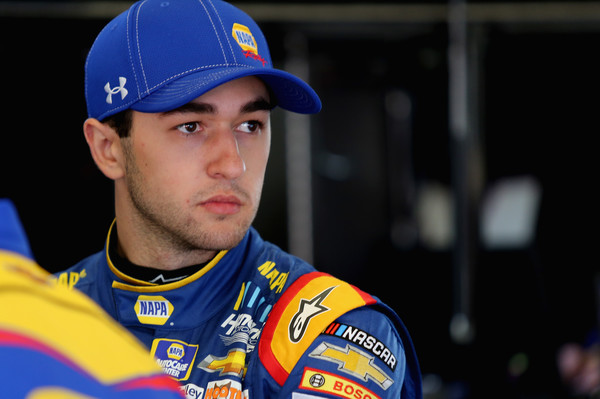
Chase Elliott, driver of the #24 NAPA Chevrolet, stands in the garage during practice for the Monster Energy NASCAR Cup Series Advance Auto Parts Clash on February 17, 2017 at Daytona International Speedway in Daytona Beach, Florida. Photo – Jerry Markland/Getty Images
Chase Elliott can’t make fans forget the legacy of the No. 24 car, but by all indications, he’s ready to make his own distinctive mark in that vaunted ride.
The history of the No. 24 car is monumental, and Elliott inherited that ride last year from the driver who made it famous.
The No. 24 has won 93 Monster Energy NASCAR Cup Series races in 1,414 starts since the number debuted in 1950. All 93 victories belong to Jeff Gordon, who retired from full-time racing at NASCAR’s highest level at the end of the 2015 season. Continue reading →
This year’s Daytona 500 (Feb. 26) will feature two 60-lap stages followed by a final 80-lap stage, with points available in all stages.
Under NASCAR’s 2017 race structure, the top-ten drivers in the first two stages will earn points, with the stage winners also earning one playoff point. The race winner gets 40 points, as well as five playoff points which can be carried forward until the season finale at Homestead-Miami Speedway.
The PowerShares QQQ 300 NASCAR XFINITY Series race will consistent of two 30-lap stages followed by a 60-lap final stage.
The NextEra Energy 250 NASCAR Camping World Truck Series race (Feb. 24) will feature two stages of 20 laps each followed by a final stage of 60 laps.
A race will be considered official after the first two stages are complete. The season-opening Daytona 500, for example, will be official after 120 of 200 laps, not after the halfway point as in the past.
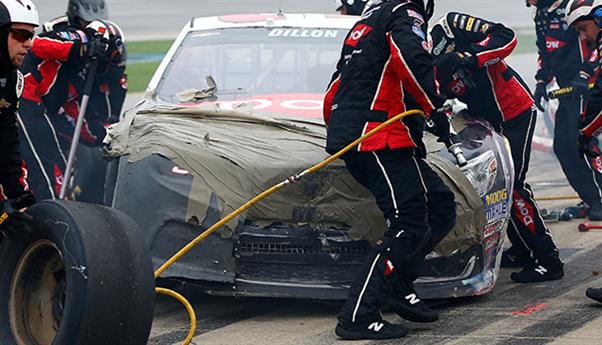
During Wednesday’s competition seminar, NASCAR unveiled a new damaged vehicle policy which will eliminate the practice of wrecked race cars limping around the track after lengthy repairs in the garage.
Based on a rule change this year, race cars and trucks damaged during accidents on the track must be repaired on pit road and able to make minimum speed within five minutes. The clock starts when the car crosses the yellow line at the entrance to pit road. The timer stops when the car crosses the yellow line on exit.
Cars that can’t be repaired on pit road within the allotted time will not be allowed to continue in the race. If a driver incurs a commitment-line violation or speeds on pit road while trying to beat the five-minute clock, 15 seconds will be added to his or her time. If the penalty puts the car over the five-minute limit, that car is retired from the race.
Additionally, teams will not be allowed to use sheet metal other than that already on the car to effect repairs. NASCAR is developing a list of required parts that may be brought to pit road—a rear bumper cover, for example.
But, said NASCAR senior vice president of competition Scott Miller, “You can replace a bumper cover, but if there’s no quarter panel to attach it to, you’re out.”
The new rule applies specifically to wrecked vehicles. Repairs for mechanical failures, such as a transmission or rear gear, may still be made in the garage.