EchoPark Speedway continues to transform. The 2022 season was the first year NASCAR Cup Series teams raced on the newly reconfigured track.
When NASCAR’s Next Gen era began in 2022, EchoPark Speedway (formerly Atlanta Motor Speedway) underwent a reconfiguration and repaving that coincided with the Next Gen car’s release. The transformation morphed the once extremely worn and unforgiving intermediate quad-oval racing surface into a unique drafting-style superspeedway layout reminiscent of a narrower and smaller Daytona with limited tire wear.
EchoPark Speedway Continues to Transform
Initially, the change was polarizing among drivers and fans. There were reservations about having six drafting-style races on the Cup Series schedule, as well as frustration over the loss of Atlanta’s previously loved and recognizable identity created by its harsh asphalt. However, the new version of EchoPark quickly delivered its own unique challenge and was eventually embraced by the industry.
The track would retain both its spring and summer dates and bring a style of superspeedway racing that differed from both Daytona and Talladega. The repaved surface was initially smooth, jet-black, offered immense grip, and produced limited tire wear—very different from the worn-out surface that defined old Atlanta. Though the track was smooth, drivers were forced to be careful and precise when navigating the track, as lifting through the corners was heavily avoided in an effort to maximize speed, often causing cars to drift too high. Not only that, but because the racing surface was so narrow, the smallest mistake often resulted in lost track position or posed the risk of triggering large wrecks. All of these factors gave the updated layout a new identity.
By 2026, EchoPark Speedway had reached a level of familiarity. Fans had grown accustomed to the event’s chaotic nature, and it had even gained a degree of prestige due to how difficult the race is to win. However, this past weekend in Hampton, Georgia, EchoPark Speedway provided yet another change that left NASCAR fans and teams surprised.
2026 Marks a Noticable Change
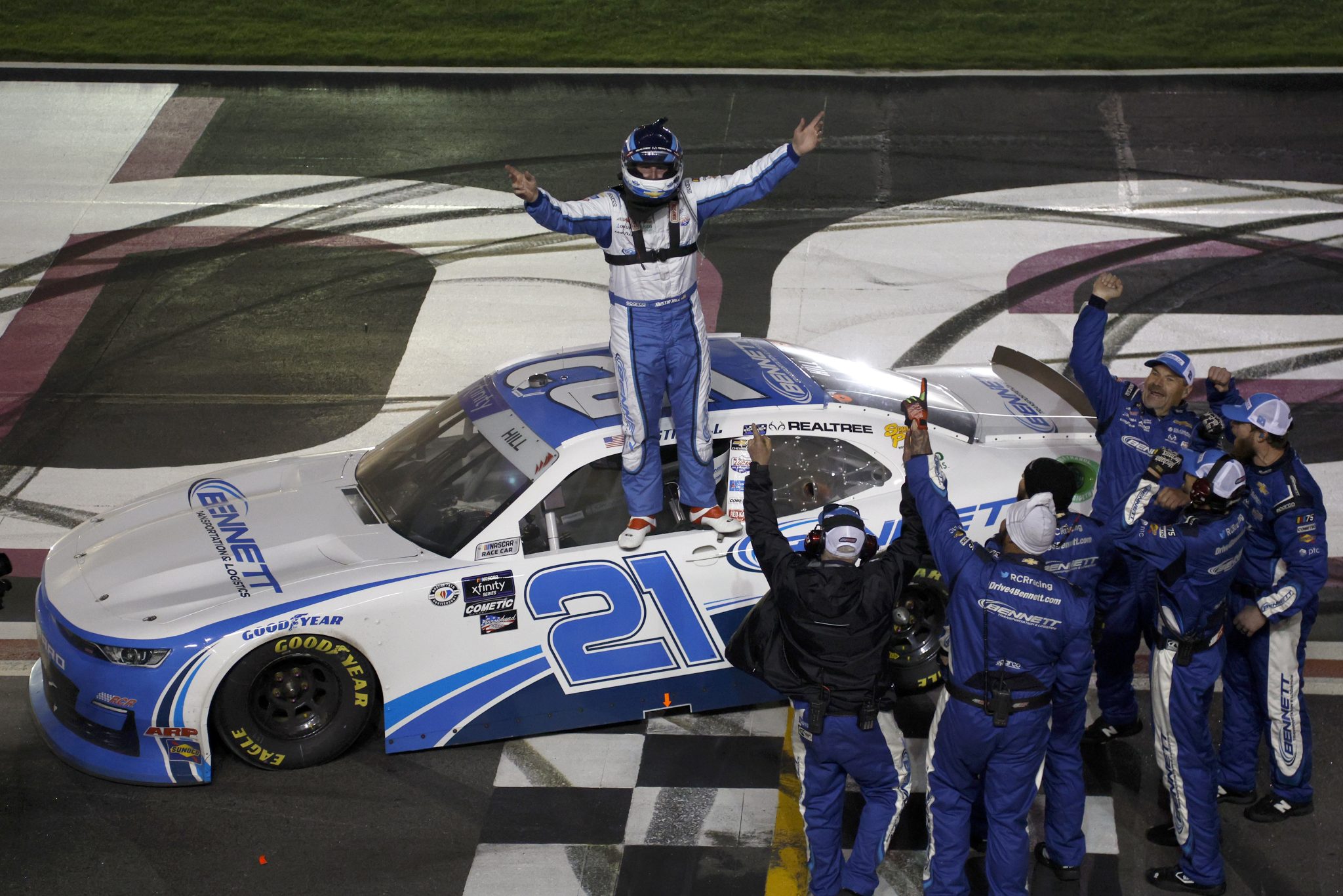
Veteran Justin Allgaier won Saturday night’s O’Reilly Auto Parts Series race. However, early in the race, before the day turned to night, the track lacked grip. While this was not unusual, the field unexpectedly spread out. Faster teams like JR Motorsports were able to gap slower cars by several seconds, while multiple smaller packs formed throughout the field. The track temperature eventually cooled as the night progressed due to numerous cautions, and the field finally began to tighten up once again.
On the Cup side, the racing was very similar, but with even less parity. Sunday night, Ryan Blaney went on to sweep both stages and lead a dominant 171 laps before ultimately winning the race. For a while, during the early stages, the racing seemed to resemble the end of the Gen 6 era and the 550-horsepower package at intermediate tracks. Many drivers such as Noah Gragson and Brad Keselowski even went a lap down in the opening stage strictly because of pace—very unconventional for a drafting track. However, after Stage 2 was interrupted by a three-hour rain delay, the race’s conclusion was pushed late into the night, and the field once again finished the event under a blanket.
This weekend’s racing surprised many in the garage because the change seemed rather sudden. Not even EchoPark’s spring date earlier this year in February produced the level of spread-out competition seen on Saturday and Sunday night.
A Carefully Orchestrated Shift
Nonetheless, the track’s sudden shift in racing was carefully orchestrated by Speedway Motorsports during the track’s reconfiguration before 2022. According to SMI, the owner of EchoPark, the intention was to avoid the decade-long wait for the track to “get character” by using a specific asphalt to speed up the process of aging and induce quicker loss of grip.
Over the past few years of harsh Atlanta weather, the track has indeed gradually lost grip and traction, and drivers have had to manage their throttles much more than they did in 2022, but Saturday and Sunday seemed to serve as a major transitional milestone.
Adapting for the Future
The asphalt at EchoPark Speedway will continue to age and weather, gradually becoming less of a “lottery-type” superspeedway and more of a challenging, intermediate-style driver’s course. It’s no surprise that champions such as Chase Elliott, Joey Logano, and Ryan Blaney have found success here. Teams expecting to rely on a “one-size-fits-all” superspeedway package will likely be surprised by how little use they get out of it. The teams that find the most success in Hampton will be those capable of adapting to this hybrid-style speedway, while drivers who put in the extra work will be rewarded over those relying solely on the security of a tightly packed draft.